

Dedi Arifka
Managing Director of DEEP EnGender
When We Help People Get Online, Who Answers for the Harm?
I went to Bangkok carrying a question from our work with the Suku Anak Dalam: when we help people get online, and the digital world harms them, who answers for it? I also wanted to connect the land and deforestation concerns in the same communities to regional work on corporate accountability.
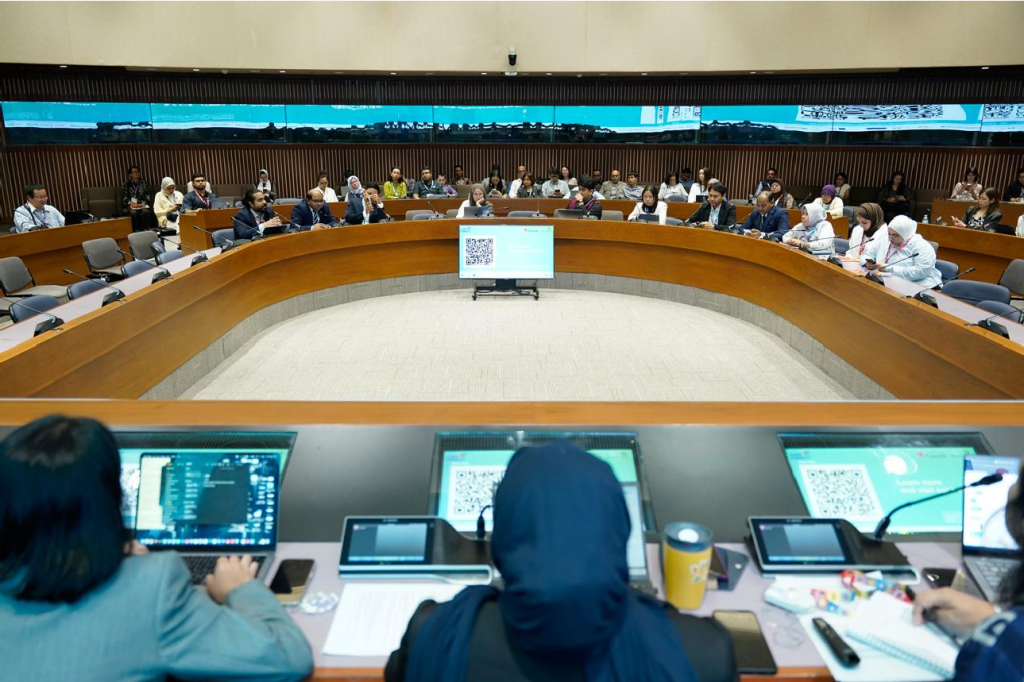
Three sessions stood out. The first was the Policy Lab on Platform Power, Consumer Rights, and Corporate Accountability, co-organized by Tifa Foundation and Open Net Korea. Professor K.S. Park explained why remedy for data harm rarely happens. Damage is hard to prove. Data protection laws apply unevenly across borders. And individual compensation is too small to justify a lawyer. Even after breaches affecting millions, fewer than 0.1% of those affected sue. Korea responded by allowing compensation without proof of actual damage.
... data protection law can be enforced selectively to shield officials from scrutiny, a real risk for civic space.
An Indonesian participant noted that our PDP Law does not yet explicitly recognize non-material damage, though a new draft regulation does. The session was framed around how US trade agreements with ASEAN countries can lock in platform power. Yet Park argued that digital trade agreements could also carry redress obligations. Trade deals, in other words, can cut either way. Later, the moderator asked what platforms should document before moving data across borders, and nobody took it up. We are practiced at making demands of states, much less of companies. Park also warned that data protection law can be enforced selectively to shield officials from scrutiny, a real risk for civic space.
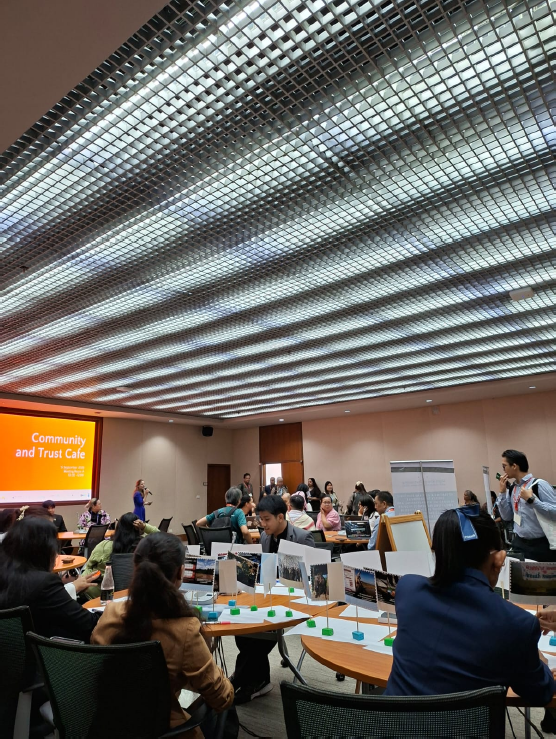
The MHREDD workshop, organized by Amnesty International and KTNC Watch, focused on keeping campaigns for mandatory human rights and environmental due diligence alive. The EU’s CSDDD experience showed that engagement must continue after a law passes. Small-group discussions compared what works across countries: coalitions, public education, and strategies adapted to national context. For us, the lesson is to document the land and deforestation concerns we see carefully enough to serve as evidence.
The OHCHR panel on human rights safeguards in AI product design focused on children. UNICEF reported that in a ten-country study, one in ten children turn to AI for advice about things that worry them. It argued that engagement-maximizing features are not neutral design choices. Its review of 30 major tech companies found that more than half commit to children’s rights, but fewer than half disclose how that commitment is governed. The comment I remember most came from a psychologist in the audience. She asked why people who take calls from distressed children are never on the panel. The same could be asked about Indigenous communities, who are rarely present when technology is designed.
Beyond the sessions, I reconnected with existing contacts and met new people working on digital rights, due diligence, community rights, and responsible technology. We agreed to keep in touch and share resources. These are early relationships, not coalitions, because we have yet to find where our work overlaps. The most concrete next step is OHCHR’s regional consultation on children’s rights in the digital environment on 29 October, where we intend to submit written input.
The Re-D Fund microgrant keeps Digital Re-Grow running, and the travel support to Bangkok changed how we want to run it. As we bring people online, we want them to learn where to turn when their data is misused, not just how to use platforms. As the policy lab’s moderator put it, if data can cross borders, remedy must cross with it. For the communities we work with, that is still far off.
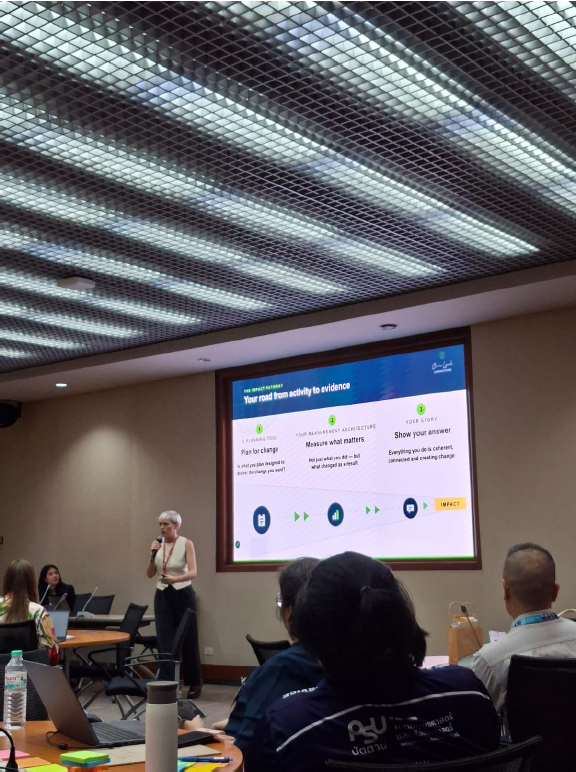
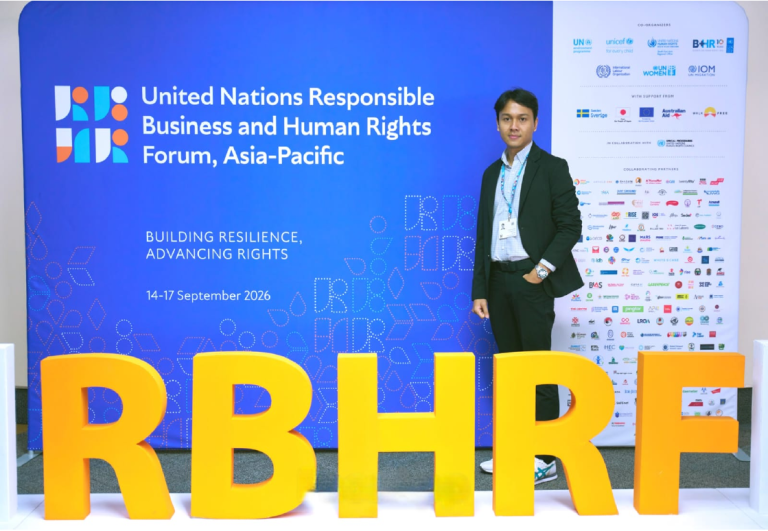
This article is part of the DDI at 2026 UN Responsible Business and Human Rights (UN RBHR) Forum Asia-Pacific series.