

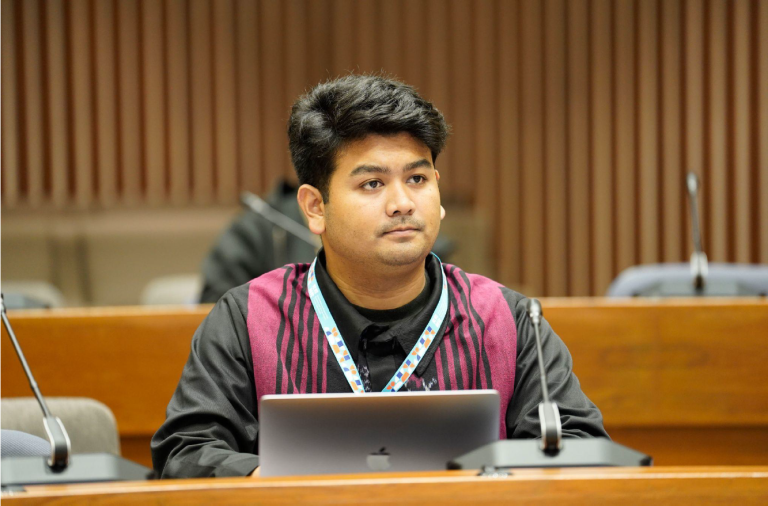
Muhammad Ichlassul Amal
Program Officer for Civic Education at the Institut Hijau Indonesia (IHI)
Bringing a Story from Indonesia to Bangkok
My trip to Bangkok was one of the experiences that stayed with me this year. Not only because I had the opportunity to attend a regional forum, but also because, for the first time, I felt that I was bringing a story from the work we have been doing in Indonesia into a much wider conversation.
I was quite proud to be part of a delegation that shared the story of the Digital Democracy Initiative (DDI) Cohort 1, especially our experience in developing Civic Education. For the past few years, I have mostly been involved in the process itself—having discussions with young people, supporting their learning, and seeing how ideas slowly turn into action. In Bangkok, I had the opportunity to share that journey with people from different countries.
I also introduced the Civic Map, which grew out of that Civic Education journey. For me, the Civic Map is more than just a program output. Behind it are stories of how young people see and experience issues related to democracy and civic space in their own communities. That is why I was happy to introduce it to colleagues from China, Japan, and Kuala Lumpur during a session led by Amnesty International. The conversation was simple but meaningful. I could share what we had been doing, while also listening to how others understood similar issues from their own contexts.
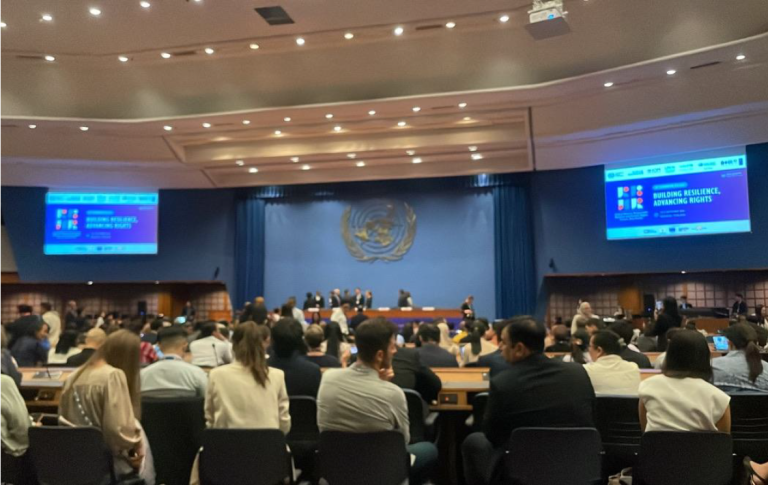
What I enjoyed most in Bangkok were actually the small conversations outside the main sessions. I had the opportunity to connect with colleagues from Green Talent Generation in Thailand. They shared stories about river pollution in Chiang Mai and Chiang Rai and its impact on the ecosystem and fish species there. Listening to their experience reminded me that environmental problems are never only about the environment. Behind them are communities, livelihoods, ecosystems, and everyday lives that are affected.
I also had a conversation with colleagues from Bridge Box, who introduced the digital technology they are developing for an early warning system. What interested me was how technology could be made accessible through an application and used by people to receive information earlier when facing environmental or disaster-related risks.
I also had several conversations with Rina Toyoshi from Japan. We exchanged stories about our work, including how activities are implemented through the Business and Human Rights Centre. Conversations like this were valuable to me because they showed that every country has its own context and challenges when it comes to turning business and human rights principles into practical work.
Another experience that stayed with me was joining the “Effectiveness and Evidence Due Diligence Capacity Building: A Peer-Learning Workshop for Practitioners.” I enjoyed this session because it was not simply about listening to presentations. We were encouraged to think and discuss what effective due diligence actually looks like. What kind of evidence do we need? How do we know whether a process is actually working? And when does due diligence become merely a formal exercise?
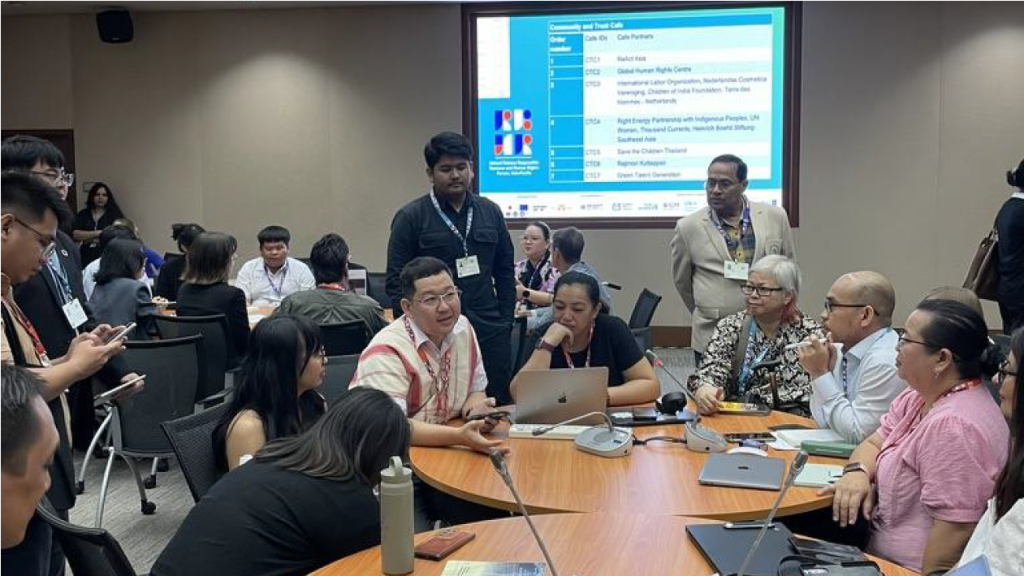
I also had the chance to join several BHR Cafe sessions. I really enjoyed these spaces because the conversations felt much more personal. Sitting together with people from different countries, listening to their experiences, asking questions, and sometimes discovering that we are dealing with similar challenges in very different places.
I came home from Bangkok with many new stories. Most of the connections I made are still at an early stage, but I am happy to know that there are people in different countries working toward similar goals and asking many of the same questions. Perhaps what makes me most proud is being able to bring a small story from Indonesia DDI, Civic Education, and the Civic Map and make it part of a wider conversation. I came back without all the answers. Instead, I came back with more questions, new perspectives, and new possibilities for learning. For me, that is what made the journey meaningful.
For me, that is what made the journey meaningful.
This article is part of the DDI at 2026 UN Responsible Business and Human Rights (UN RBHR) Forum Asia-Pacific series.