
Arie Mega
Project Research and Learning Specialist for the Digital Democracy Initiative at Tifa Foundation
Building A Network of Young Tech Activists for Southeast Asian Civil Society
A training usually ends when its participants go home. The materials sit in a folder, the photos are uploaded, and slowly the daily grind takes over until what was learned fades away. The Young Tech Collective (YTC) is designed precisely to resist that pattern.
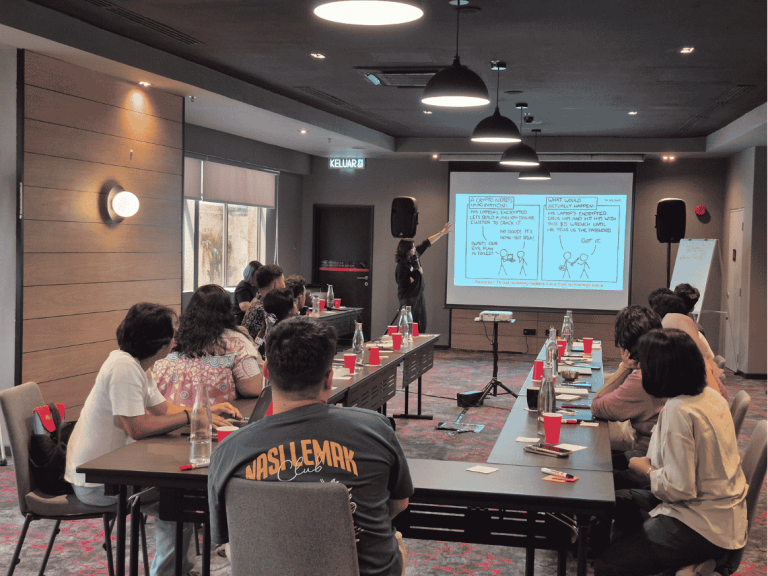
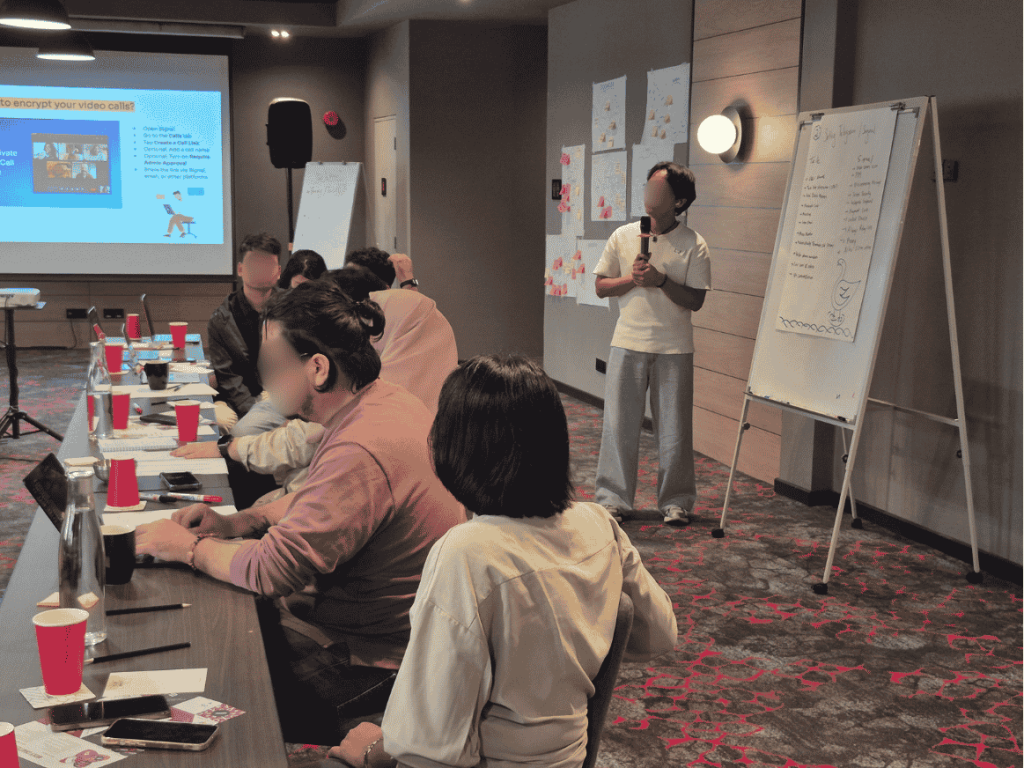
When 20 focal points from across Southeast Asia left Kuala Lumpur in late May 2026, they did not simply carry notes home. They stayed connected within a network deliberately built to outlive the final day of training. This is where one of YTC’s core objectives lies: building a community of practice, a cross-country community in digital security for civil society.
More Than Training Alumni
The critique behind YTC’s design is simple: one-off training rarely sticks. The awareness that surfaces in a classroom usually evaporates once participants return to their piles of daily work. That is why the five days in Kuala Lumpur are treated not as the main event, but as one point within a longer process.
After the training, the focal points remain connected through an encrypted cross-country messaging group and a shared repository for materials and working documents. Over the four months of accompaniment, they take part in regular check-ins with the Tifa programme team and in mentoring sessions, with each organisation working from an agreed action plan. The network, in other words, is not just a chat group that happened to form because people once shared a room. It is a planned part of the programme.
“I hope this network keeps going, so that we can support each other,”
A Network Already at Work
For some participants, the network bore fruit even before the training ended. AC, a focal point from an organisation in Yogyakarta, was connected by the facilitator to a community technology initiative in his own city, something he had not known was so close by.
“The hope is that we can collaborate much more,” AC said. “We already had a chance to talk, and there are a few opportunities we could combine so the impact is greater.” For a small organisation with limited resources, connecting with others facing similar problems is often worth more than any single new tool.
The network also works by widening the circle. GL, a focal point from a youth organisation in the Philippines, plans not only to train her own staff but to open the door to other organisations. “We want to invite other organisations too, one representative each, to sit in with us,” she said. That way, the capacity she brought home from Kuala Lumpur does not stop at one institution, but spreads into a wider network.
Strength in Different Contexts
The twenty focal points came from very different contexts, from Myanmar, the Philippines and Indonesia to other countries in the region. That difference is precisely what makes the community strong. What is a routine security habit in one country can be genuinely new knowledge for a participant from another, and the other way around. A best practice from one context can be borrowed, tested, and then adapted to another.
For DF, a focal point from a regional youth network organisation, this is the value she most wants to protect. “I hope this network keeps going, so that we can support each other,” she said. “Whether that is mental support, or international support, movements and campaigns that back each other up.” Collective care of that kind is hard to grow from a training that ends in a day, but it can grow from a network that stays connected.
What Keeps a Network Alive
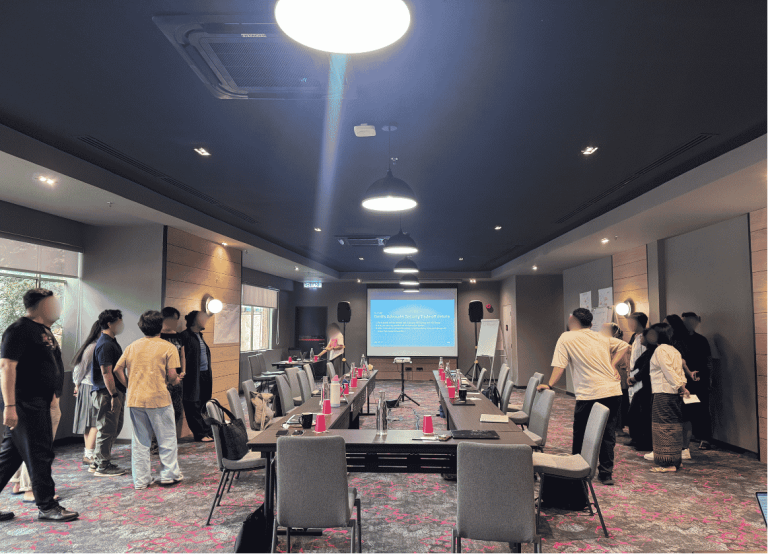
Infrastructure alone is never enough. A messaging group and a shared repository can easily turn into quiet rooms if there is no strong reason for people to stay engaged. The real question is not about the tools, but about the people who tend to them.
According to RS, one of the facilitators from the Digital Defenders Partnership (DDP), what keeps a community alive is when security is treated as shared work that is continually maintained. “How they build security collectively, who has the technical capacity, and who is willing to keep reminding the group to keep talking about it,” he said. A network endures not because its app is sophisticated, but because there are people willing to keep opening the conversation.
“Security is the most fundamental aspect of an organisation. Without security, what can you do?”
Towards a Regional Protection Infrastructure
Looking ahead, YTC imagines this network growing into something more than a place to exchange news. One direction being prepared is the development of shared digital security learning materials that can be translated into the region’s various languages and paired with hands-on guides, so that knowledge which once lived only in a training room can be accessed and reused by other organisations over the long term.
At that point, the focal points’ network is no longer merely a by-product of a training, but part of the digital protection infrastructure for civil society in Southeast Asia. For GL, the stakes really are that high. “Security is the most fundamental aspect of an organisation. Without security, what can you do?” she said. And security, as this training insisted throughout, can never be built alone.
About the Young Tech Collective (YTC)
As DDI’s non-financial support mechanism, Tifa implements YTC together with DDP to address the pressing needs of civil society organisations (CSOs), which often face limited resources and technical capacity in digital protection. Field experience shows that one-off training is frequently not enough: knowledge gained in the classroom rarely survives the return to daily work routines, and the security practices introduced are easily abandoned when no further accompaniment follows. Adopting a holistic, community-based and intersectional approach, YTC therefore provides four months of accompaniment designed around each partner organisation’s contextual risk profile, facilitating them to strengthen their holistic security capacity through a series of trainings, the strengthening of technological infrastructure and internal policy, and mentoring. The programme currently works with 13 organisation CSOs across Southeast Asia. Through this process, focal points connect with a network of young tech activists in the region and become part of the digital protection infrastructure for civil society.
Written as part of the learning documentation for the Young Tech Collective (YTC), a non-financial support mechanism under the framework of the Tifa Foundation’s Digital Democracy Initiative (DDI).