

Arie Mega
Project Research and Learning Specialist for the Digital Democracy Initiative at Tifa Foundation
Facing Terror in Cyber Space: The Real Stakes for Young Activists
On paper, security threats fit into tidy boxes: digital here, physical there, psychosocial somewhere else. But for civil society activists and journalists in Southeast Asia, these dangers never stay separate. Instead, they bleed together, amplifying each other and casting a shadow over daily life.
Picture this: an investigative journalist masters encryption, yet finds their courage to write slowly drained by creeping anxiety. An organisation guards its database fiercely, but all the data lives on one laptop, always at risk if its carrier is stopped at a checkpoint. Or a female activist, well-versed in digital risks, faces her greatest fear not online, but when strangers appear at her door.
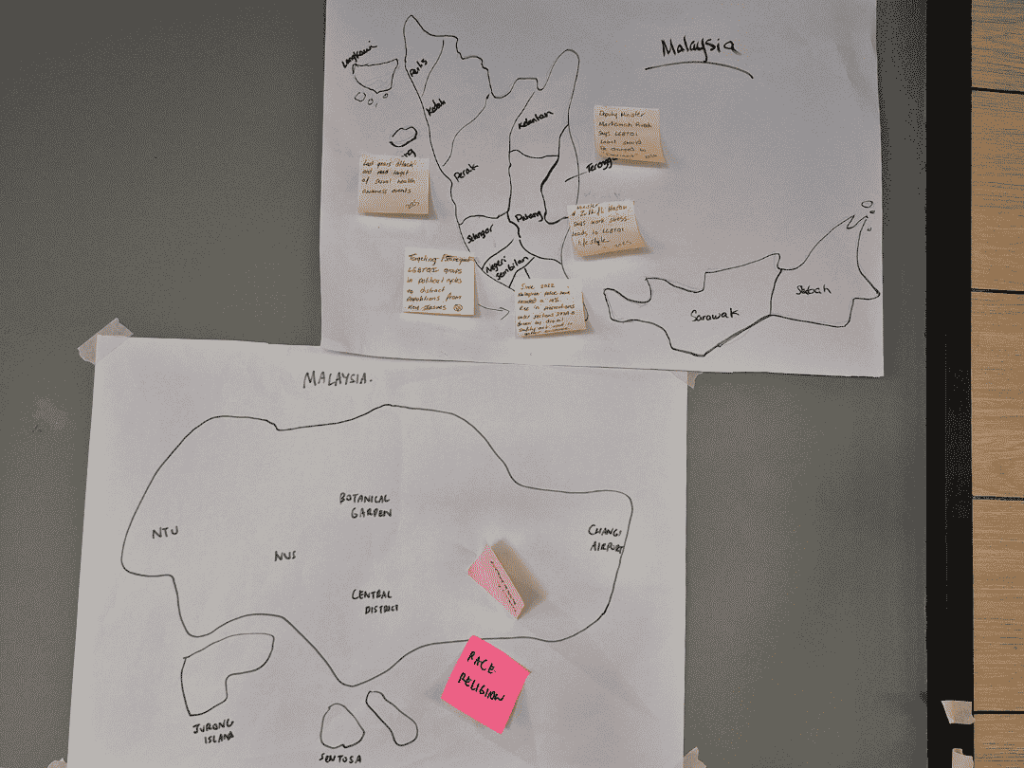
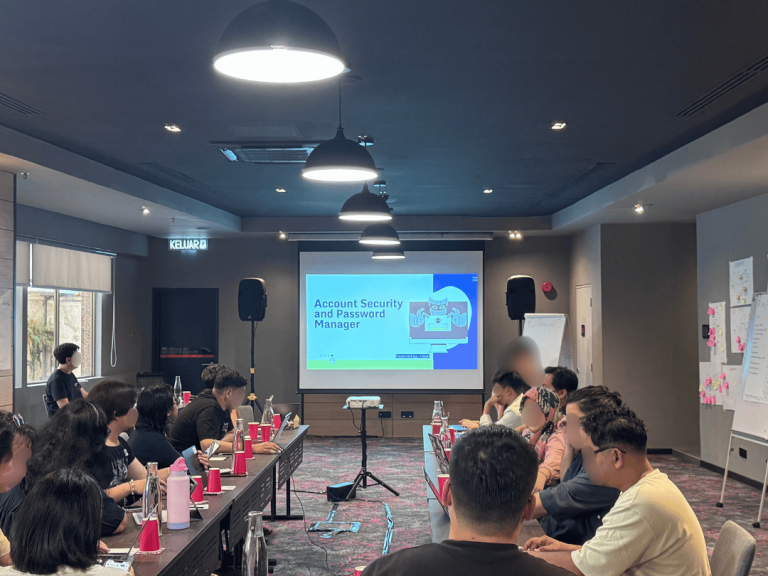
This tangled web of daily vulnerabilities is exactly why the Young Tech Collective (YTC) onsite training, hosted by the Tifa Foundation and Digital Defenders Partnership (DDP) in Kuala Lumpur in May 2026, feels so urgent. Over five days, twenty focal points from across the region shared their stories, and those stories underscored one thing: terror in cyberspace rarely stops at the screen.
"The risks are incredibly real.”
The Threat That Follows You Home
AC, Website Coordinator from a youth-led organisation in Yogyakarta, brought this digital-physical spillover to life. As a Focal Point guiding networks of outspoken young activists, AC has seen just how thin the line is between digital safety and real-world danger.
“Our youth actor friends have repeatedly faced cyber attacks on their social media,” AC shared. “Recently, someone faced mass hate comments, another was harassed with continuous food delivery orders they never placed, and someone’s family was even doxxed. The risks are incredibly real.”
For AC, this situation is exacerbated by the digital ecosystem in Indonesia, which he describes as highly vulnerable. “Whether we like it or not, we live under surveillance. We are forced to share our personal identity data digitally just to get official documents, while on the other hand, we know that national ID data can easily be bought and sold on the dark web,” he stated critically.
Often, these vulnerabilities grow from tiny, overlooked habits: using one email for everything, keeping sensitive contacts unprotected on a phone, or leaving old coordination groups full of strangers on messaging apps.
When Crossing a Border Means Deleting Yourself
If in Indonesia the threat reaches the front door, for focal points from Myanmar the line between digital threat and physical danger barely exists at all. There, digital security is not a matter of convenience, but of whether a person can pass a checkpoint without being arrested.
PH, a focal point from Myanmar who now works across borders, described the ritual he goes through every time he crosses. Not simply locking apps, but deleting them entirely. “We never bring those kinds of applications. We have to delete everything,” he said. A single wrong app on a phone can mean detention. “If the government gets stricter, my advice is, do not use it at all. Because of that application, many, many activists are arrested.”
A female focal point from Myanmar, who asked not to be named, said the heaviest burden was not technical at all. “Mentally, it is very difficult,” she said, describing what it is like when officers ask to inspect her phone at a checkpoint. The room to hide has narrowed further. She noted that since 2023, the Myanmar government has been collecting citizens’ biometric data comprehensively, making a person’s trail far harder to erase.
Preparation before travelling has therefore become part of the work itself. Devices are wiped clean, social media is curated to carry only neutral topics, and any document linking a person to their organisation is deliberately left behind. For them, securing data and safeguarding the body have long been one and the same job.
“The government links us with terrorist groups freely,”
The Fear That Stays in Your Head
If in Myanmar the threat is felt most sharply at the checkpoint, in the Philippines it takes the form of a pressure that settles in the mind. LJ, a focal point from a labour and human rights institution in the Philippines, recounted how his organisation has been labelled a terrorist group ever since the anti-terror law was passed, a practice known there as red-tagging. “The government links us with terrorist groups freely,” he said. Since then, the attacks have come almost daily.
“Suspicious accounts comment on our posts, send us AI-generated photos accusing us of being terrorists, and even send threats to our staff’s personal accounts,” LJ said. Some of his staff have experienced direct surveillance. That relentless pressure leaves a mark that is invisible, yet very real.
That is why, throughout the training, LJ repeatedly raised the dimension people most often forget when they talk about digital security. “We need to consider care, psychosocial intervention,” he said. “Because it produces mental stress for everyone.” This is the third dimension the holistic security approach insists on, that protecting the mind matters as much as protecting data and the body.
"... We need to develop a simple digital security brief that can easily be applied by our young peers according to their actual needs.”
Security as a Collective Practice
These three dimensions, digital, physical, and psychosocial, cannot be safeguarded in isolation, and just as importantly, cannot be safeguarded alone. A key lesson from the YTC risk assessment is that digital security is never just a solo effort. One person’s discipline means little if teammates or the wider communication network let their guard down. The whole organisation stays exposed.
For AC’s organisation, with 20 staff and hundreds of external beneficiaries, the real challenge is weaving security into the fabric of their daily culture.
“Securing and educating hundreds of people is a struggle in itself,” AC admitted. “Our concrete plan moving forward is not to rush into changing things or forcing complicated new tools. Instead, we want to conduct a comprehensive risk assessment internally first. We need to develop a simple digital security brief that can easily be applied by our young peers according to their actual needs.”
In the end, there is no single answer to the question of which app is safest. Security always depends on the situation: the threats at hand, the team’s skills, and how well the group looks out for each other. In a world of constant surveillance, only a culture of shared vigilance can help activists endure.
About the Young Tech Collective (YTC)
As DDI’s non-financial support mechanism, Tifa implements YTC together with DDP to address the pressing needs of civil society organisations (CSOs), which often face limited resources and technical capacity in digital protection. Field experience shows that one-off training is frequently not enough: knowledge gained in the classroom rarely survives the return to daily work routines, and the security practices introduced are easily abandoned when no further accompaniment follows. Adopting a holistic, community-based and intersectional approach, YTC therefore provides four months of accompaniment designed around each partner organisation’s contextual risk profile, facilitating them to strengthen their holistic security capacity through a series of trainings, the strengthening of technological infrastructure and internal policy, and mentoring. The programme currently works with 13 organisation CSOs across Southeast Asia. Through this process, focal points connect with a network of young tech activists in the region and become part of the digital protection infrastructure for civil society.
Written as part of the learning documentation for the Young Tech Collective (YTC), a non-financial support mechanism under the framework of the Tifa Foundation’s Digital Democracy Initiative (DDI).