
Press Releaseon Addressing Violence Against Journalists in the Outermost Islands: KKJ Kepri Successfully Established
“Journalists who join the KKJ do so to protect themselves in the event of violence in the field. This is a very positive development, because until now, violence against journalists—especially in island regions or remote areas—has often gone undetected,” said Nany.
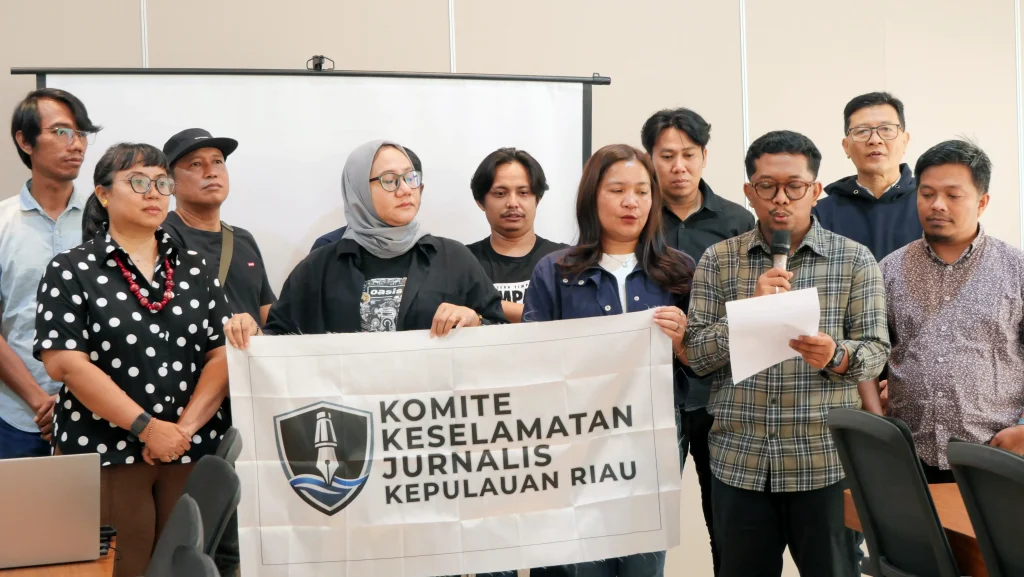
Batam, March 8, 2026 — A number of professional journalism organizations, media business organizations, and civil society networks formed the Riau Islands Journalists’ Safety Committee (KKJ Kepri) on Sunday, March 8, 2026.
The professional journalism organizations behind this initiative are the Independent Journalists Alliance (AJI) Batam, AJI Tanjungpinang, the Indonesian Journalists Association (PWI) Riau Islands, PWI Batam, the Photojournalists Association (PFI) Riau Islands, and the Indonesian Television Journalists Association (IJTI) Riau Islands. They are supported by media business organizations: the Indonesian Online Media Association (AMSI) of the Riau Islands and the Indonesian Online Media Network (JMSI) of the Riau Islands, as well as the civil society network the Legal Aid Institute for the Islands (LsBH) MK.
The KKJ is expected to serve as a protective framework for journalists in the performance of their duties, particularly in the Riau Islands Province. The establishment of the Journalist Safety Committee in the Riau Islands is also the result of a collaboration between the Tifa Foundation and AJI Indonesia. The KKJ in the Riau Islands Province is the 12th of its kind in Indonesia and the fifth to receive support from the Tifa Foundation’s Safe Journalism program.
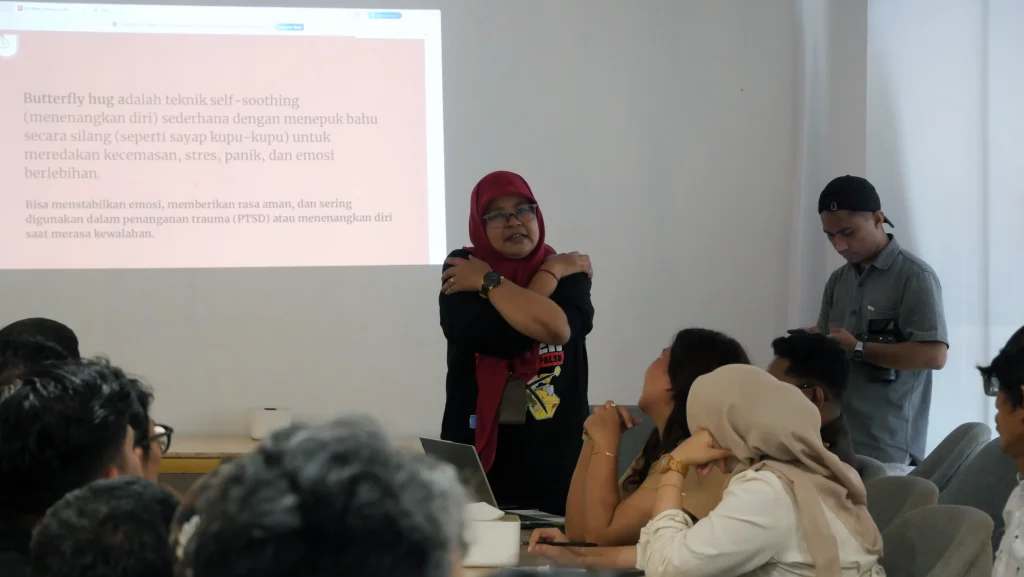
Prior to the declaration, participants received training on holistic safety and advocacy. The event took place over two days, from Saturday to Sunday (March 7–8, 2026), in Batam City. The training was attended by a number of journalists from various media outlets in the Riau Islands. The event aimed to enhance journalists’ capabilities in the areas of physical, digital, and psychosocial safety, while also strengthening protection mechanisms for journalists in the region.
AJI Indonesia Chairperson Nany Afrida said that the establishment of the KKJ Kepri is an important step toward expanding the protection network for journalists in Indonesia. According to her, the presence of the KKJ in the Riau Islands can provide protection for journalists who face intimidation or violence while carrying out their journalistic duties.
“Journalists who have joined the KKJ do so to protect themselves in the event of violence in the field. This is a very positive development, because until now, violence against journalists —especially in island regions or remote areas—has often gone undetected,” said Nany.
Based on data from recent years, AJI has received a significant number of reports regarding acts of violence, cyberattacks, and intimidation against journalists and media companies in the Riau Islands. “It is hoped that in the future, the KKJ will play a role in protecting the work of journalists in the Riau Islands region,” said Nany.
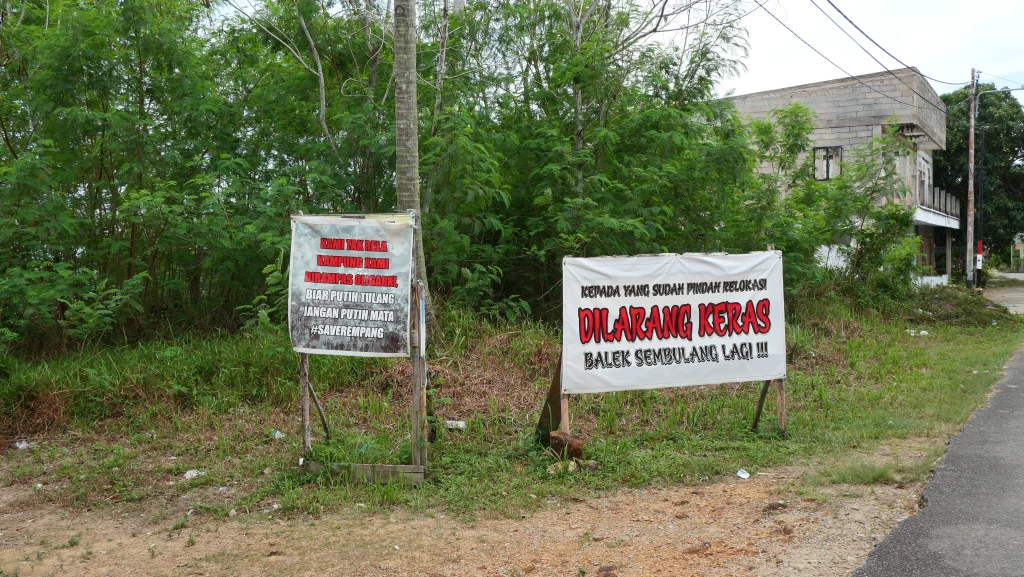
In December 2025, a journalist was subjected to intimidation after being accused of involvement in a protest against land acquisition by residents on Rempang Island, Batam City, following his reporting on police violence in the area. Additionally, a reporter for Liputan6.com (2021), Ajang Nurdin, who wascovering—via a doorstop interview—a visit bythe Minister of Transportation (Menhub), Budi Karya Sumadi, in Batam, also faced violence in the form of being choked, shoved, and dragged away from the Minister’s entourage. This was followed by an invitation to mediation at the Ministry of Transportation in Jakarta, whichwasalso“framed”after the invitation was declined by claiming a positive Covid-19 test result, even though the journalist in question had undergone two tests at the hospital with “negative” results.
“I took a PCR test, and then I contacted AJI Indonesia. AJI Indonesia said I wasn’t allowed to go to Jakarta without an escort. So I decided not to go. However, a few hours later, I suddenly received news that I had tested positive—after I had already refused to go to Jakarta. I was labeled as having COVID-19. So I took the initiative, together with AJI Batam, to get a PCR test at another hospital, and the result came back negative,” Ajang explained.
Erick, Coordinator of KKJ Indonesia, added, “Ajang has been subjected to a series of attacks: he was restrained by an aide, approached by two BIN agents, and then falsely accused of having COVID-19. The victim has suffered repeated acts of violence, while his wife has been subjected to intimidation. It is also regrettable that the editorial staff and management sided with the perpetrators by agreeing to a settlement.”
Nany emphasized that every case of violence against journalists must be brought to the public’s attention and prosecuted to ensure there is no impunity or lack of accountability. “We hope there will be no more violence against journalists in the Riau Islands. But if it does happen, the case must be resolved through legal channels. With the KKJ in place, we hope no one will act arbitrarily toward journalists anymore,” she said.
The chairperson of AJI Indonesia added that the KKJ Kepri is not comprised of just one professional organization. A number of journalists’ organizations, such as PWI, IJTI, and PFI, as well as legal aid institutions, are also involved in the committee, which is expected to strengthen advocacy efforts on behalf of journalists.
The newly elected coordinator of the Riau Islands Journalists’ Association (KKJ), Muhamad Ishlahuddin, said the formation of this committee is expected to serve as a platform for journalists to fight back when they face intimidation, bans on reporting, or violence in the field. “The KKJ is expected to be the first line of defense when our fellow journalists face intimidation or violence while on the job. Through this committee, we can mitigate and advocate for the various issues faced by journalists,” he said.
He added that the presence of the KKJ in the Riau Islands also serves as a platform for collaboration to advocate for journalists’ rights while ensuring that press freedom is upheld.
Meanwhile, Arie Mega, Project Officer for the Tifa Foundation’s Safe Journalism Program, expressed her appreciation to all parties involved in the training and establishment of the KKJ Kepri. According to him, this initiative is part of the Safe Journalism Program launched by the Tifa Foundation in collaboration with a consortium of civil society organizations—namely the Association for the Development of Indonesian Media (PPMN) and the Human Rights Working Group (HRWG)—with support from the Embassy of the Kingdom of the Netherlands.
The program aims to strengthen the ecosystem for the protection of journalists in Indonesia through a comprehensive security approach.
“We understand that the safety of journalists is not just a matter of individual safety, but is also directly linked to the quality of democracy and the public’s right to information,” said Arie.
He believes that threats to journalism are becoming increasingly complex, ranging from physical violence and intimidation to digital attacks and bans on reporting. According to him, journalists often deal with sensitive issues such as the environment, investment, labor, and corruption. These conditions make the need for mechanisms to protect journalists at the local level all the more important.
“Therefore, this training not only enhances journalists’ understanding of safety but also serves as a crucial step toward establishing protection mechanisms through the formation of the Riau Islands Journalists’ Association,” he said.
Safe Journalism is a program initiated by a consortium comprising the Tifa Foundation, PPMN, and HRWG. It is supported by the Embassy of the Kingdom of the Netherlands. The program aims to create a safe and equitable ecosystem for journalists and media organizations.
As of March 2026, Safe Journalism has facilitated the establishment of five (5) of the 12 Journalist Safety Committees in Indonesia: the Aceh Journalist Safety Committee (KKJ Aceh), the Central Sulawesi Journalist Safety Committee (KKJ Central Sulawesi), the Southeast Sulawesi Journalist Safety Committee (KKJ Southeast Sulawesi), the Central Java–Special Region of Yogyakarta Journalist Safety Committee (KKJ Central Java–Special Region of Yogyakarta), and now the Riau Islands Journalist Safety Committee (KKJ Riau Islands).
This program provides an integrated portal for complaints, assistance, and learning at JurnalismeAman.com that is accessible to the public.
Contact:
| Arie Mega [email protected] Project Officer at the Tifa Foundation for Safe Journalism |
[email protected] Communications Officer, Tifa Foundation |