Re-D Fund
Reimagining Futures for Digital Democracy
The Re-D Fund is a financial support mechanism that provides microgrants to civil society groups using digital technologies to expand civic participation, advance rights-based reforms, and strengthen organizational resilience in the digital age.
The Fund addresses the shrinking civic space and barriers to funding by:
Seeding new
or
early-stage initiatives
Supporting the
scale-up
or
replication of proven initiatives
Bringing the Fund closer to groups that are underrepresented in traditional funding models

Intended Outcome
Local civil society groups in East and Southeast Asia gain more equitable access to financial and non-financial resources and support networks, enabling them to implement strategies that strengthen their democratic foundations in the face of challenges in the digital age.
The Re-D Fund
Who We Support
At least 100 local collaborators are expected to benefit from the Re-D Fund, with at least 50% of subgrantees coming from marginalized groups, including:
Women
Youth
Informal and Grassroots Groups
Indigenous Peoples
Gender Minorities
The Re-D Fund
Eligible Groups
Civil society groups, collectives, communities, or networks representing marginalized groups
Operating in closed, repressive, or obstructive countries in East or Southeast Asia (as defined by the CIVICUS Monitor) and eligible for official development assistance (OECD DAC)
Has been in operation for at least 3 years
Legally registered in an East or Southeast Asian country or working with a host organization or fiscal sponsor
Able to receive grants directly or through the host organization’s or fiscal sponsor’s bank account
The Re-D Fund
Thematic Tracks
Projects supported by the Re-D Fund are expected to address civic space in the digital age through one or more of the following priority areas:
Advancing reforms to promote civic freedoms
This cluster focuses on efforts to secure and enhance legal and policy frameworks that safeguard fundamental civic freedoms, such as expression, assembly, and association, while also promoting democratic innovation in governance. It supports research to understand the legal landscape, advocacy campaigns to promote reforms, and platforms for policy dialogue among stakeholders. Activities aim to create an enabling environment where civic freedoms are actively protected and advanced through evidence-based interventions, including fostering new participatory and inclusive governance models that deepen citizen engagement and improve democratic decision-making.
Activities include, but are not limited to, legal research, policy research, advocacy campaigns, policy dialogue forums, government transparency monitoring, human rights monitoring and documentation.
Enhancing civic participation among marginalized groups
This area focuses on empowering marginalized communities, such as women, youth, gender minorities, ethnic minorities, and informal grassroots organizations, to participate actively in civic and political processes, including fostering new participatory and inclusive governance models that deepen citizen engagement and improve democratic decision-making.
Activities include, but are not limited to, capacity building tailored to these groups, creating inclusive platforms for dialogue and leadership, and ensuring digital tools and spaces are accessible, safe, and effective for their engagement.
Strengthening civic engagement
This cluster is oriented toward empowering civil society actors to increase their visibility, engage effectively with the public and policymakers, and drive regional/global discourse. The focus is on capacity building of individuals and groups, convening coalitions for collective action, and raising public awareness through education and campaigns.
Activities include, but are not limited to, capacity-building workshops, coalition-building convenings, public engagement campaigns, civic and political education, and regional/global advocacy.
Building holistic resilience
This cluster emphasizes building the holistic resilience of civil society actors by addressing multiple dimensions of risk, including psychosocial, legal, financial, and digital threats. It supports the development of resources and capacities to withstand and recover from digital attacks and threats, as well as strengthening the foundations of civil society organizations so that they can have a long-term and sustainable impact. This approach acknowledges that sustainable civic engagement requires holistic support systems.
Activities include, but are not limited to, capacity-building, resource development for psychosocial, legal, and digital resilience, research and monitoring on digital threats and attacks, and internal policies and procedures development.
Expanding civil society resources
This cluster aims to broaden and diversify the resource base of civil society groups to ensure long-term sustainability. It supports efforts in fundraising skills development, piloting innovative income-generating activities, shared infrastructure establishment, and advancement of civic technology. The goal is to reduce dependency on traditional funding and strengthen the financial independence and operational effectiveness of civil society actors.
Activities include, but are not limited to, research and advocacy for funding diversification, training in fundraising skills, piloting income-generating initiatives, shared infrastructure, and civic tech development.

The Re-D Fund
Grant Structure
Two Cohorts
of subgrantees
Prioritized project locations: Cambodia, Indonesia, Laos, Malaysia, Myanmar, Philippines, Taiwan, Thailand, Timor Leste, and Vietnam
The Re-D Fund
COHORT
COHORT 1
For 50 subgrantees with project implementation under
1 March – 31 May 2026
COHORT 1
For 50 subgrantees with project implementation under
22 July – 23 October 2026
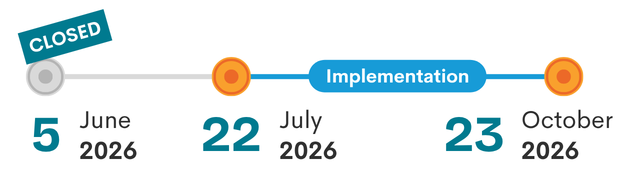
Apply before 14 June 2026.
The Re-D Fund
Grant Size (Up to)
for Joint Application (2+ Organisations)
USD
0
for Single Application
USD
0
The Re-D Fund
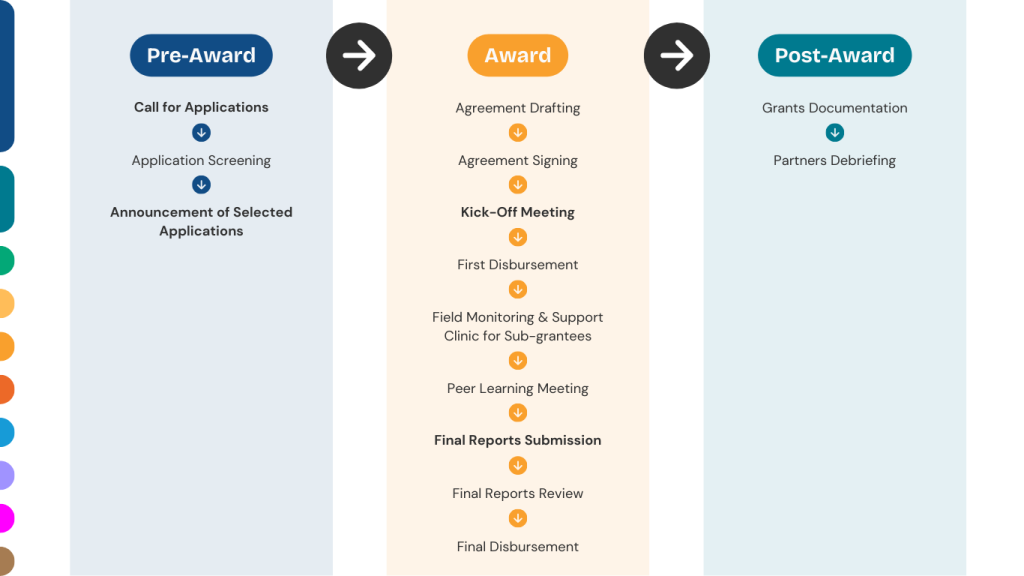
Sub-Granting Process