

Sau Fong
Staff member at the Centre for Independent Journalism (CIJ), a feminist, freedom of expression watchdog and non-profit organisation that aspires to a society that is democratic, just and free, where all peoples will enjoy free media and the freedom to express, seek and impart information.
Rethinking Who We Build Digital Rights with
This article is part of the DDI at DRAPAC 2026 series.
Participating in DRAPAC Manila 2026 broadened my perspective on digital rights issues. From sessions on Foreign Information Manipulation and Interference (FIMI) to digital trade agreements to the blunt question of whether Big Tech serves people or profit, one thread ran through everything. The information we consume and the trail we leave behind carry consequences far beyond our daily lives.
At a personal level, it’s a reminder to be more aware of the information we exchange every day, to keep a healthy sceptical mindset, to question, clarify, verify, and search for the most objective truth. At an advocacy level, our cause must remain locally relevant, but we also have to consider its wider implications at the global level. The challenges we face in Malaysia don’t happen in isolation. They’re shaped by the same platforms and information battles playing out everywhere else in the region.
Fandom, youth, and shared stewardship
One of the sessions I found most memorable is “Stan Power to People Power: How Fandoms Power Digital Activism in the Philippines,” organized by K-pop Stans 4 Good Governance and DAKILA, where I heard how a youth advocate and a lawyer leveraged their fandom skills for advocacy and civic engagement. While the issues and operational models of commercial and nonprofit spaces differ significantly, they share certain core strategies and approaches. The ability of fandom communities to inspire people to participate, contribute, and take action is remarkably organic and vibrant, and that took a lot of hard work too.
One of the panellists added a comment that stayed with me. She spoke about the pressure young people carry from being told that “the world belongs to the youth,” and urged experienced advocates not to hand over leadership, like asking someone to lead a lion dance, without giving them the proper guidance and support first. It was less a call to hand over the reins and more a reminder that youth need mentorship and preparation, not just responsibility placed on their shoulders. “Shared stewardship” may be the right term, since it takes both generations working together to ensure the world remains viable.
"Shared stewardship" may be the right term, since it takes both generations working together to ensure the world remains viable.
Sau Fong
Rethinking who we sit across the table from
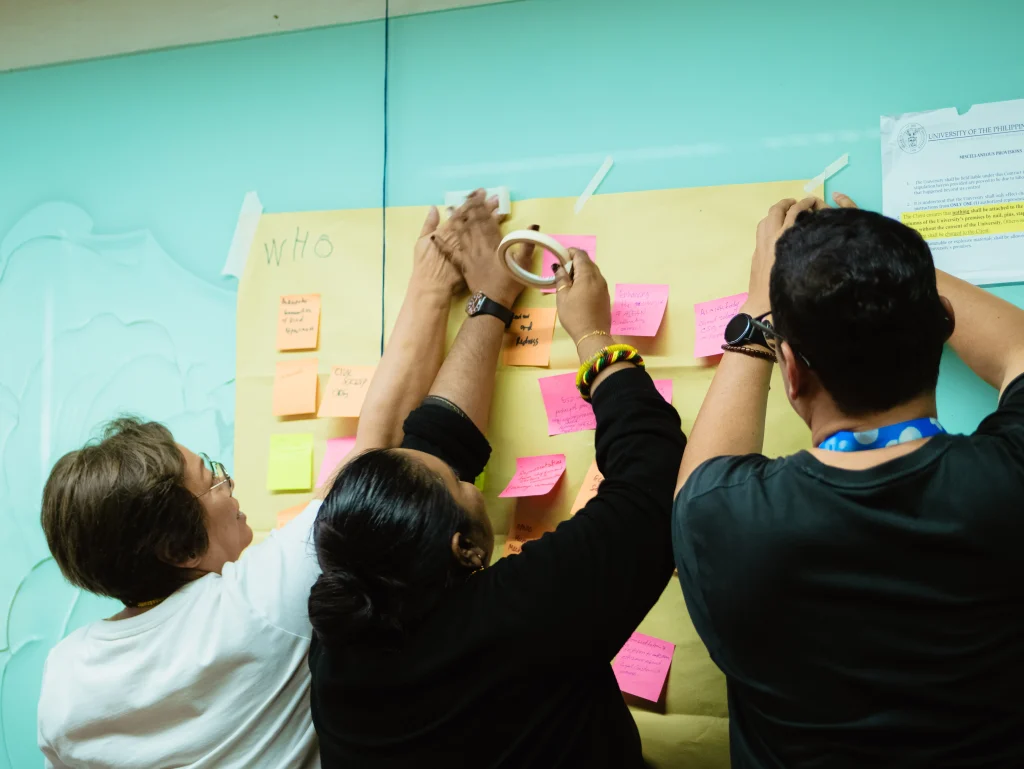
A three-hour workshop on multistakeholder models for digital platforms co-organized by CIJ, Tifa, and partners in Southeast Asia also challenged us to think outside the box and explore collaboration with unexpected partners, such as policymakers and platform owners. We should shift our assumption that authorities or certain stakeholders are unwilling to work with civil society organizations on AI and digital rights issues. In many instances, building trust-based relationships, instead of putting us in opposition, would work better. This ongoing “reimagining” process is more than a self-challenge in problem-solving. It gives us, especially those who have been advocating for decades, hope to continue the journey and the courage to dare to dream once more.
What this means for how we work
The session “Resourcing Digital Rights Advocacy in Southeast Asia,” co-organized by Tifa, CIJ, and FMA, spoke directly to a question we grapple with constantly. A collective approach, where a few organizations sharing the same vision, mission, and goals leverage strategic partnerships together, may be one of the more efficient paths for CSOs to consider. It has been tested and is still being worked on by some organizations in Malaysia and Indonesia. This allows us to borrow strength, not just to build internal resilience but also to amplify voices and multiply the impact we create. Working together also means not replicating work already being carried out by others. The limited resources we have now should be wisely spent on our cause and strategies within the ecosystem, complementing each other’s work rather than competing with one another. Narrative shaping is another key area worth investing in. There is definitely money in the market, but we first need to let people understand us and the impact we aim to create, our movement, by speaking a language they understand and that convinces them enough to buy in.
Looking ahead, a few things stay with me. Continuing to give staff the chance to step into regional and global spaces like this one matters because it really does change how we see our own work. So does bringing younger and older colleagues together to learn from each other, rather than drift apart. Our communications could stand to feel more human too, since advocating for change doesn’t always have to be heavy, and there’s room to keep finding better ways to tell our own story. And there’s value in continuing to look for the right partners to build with, instead of going it alone.