Press Release from the Tifa Foundation: Urgent Need for AI Safeguards in the Public Sector
One notable incident involved ETLE issuing traffic citations to emergency medical services and deactivating BPJS PBI services—actions deemed to have been carried out automatically and non-transparently with the aid of technology. As a result, access to healthcare services was hindered.
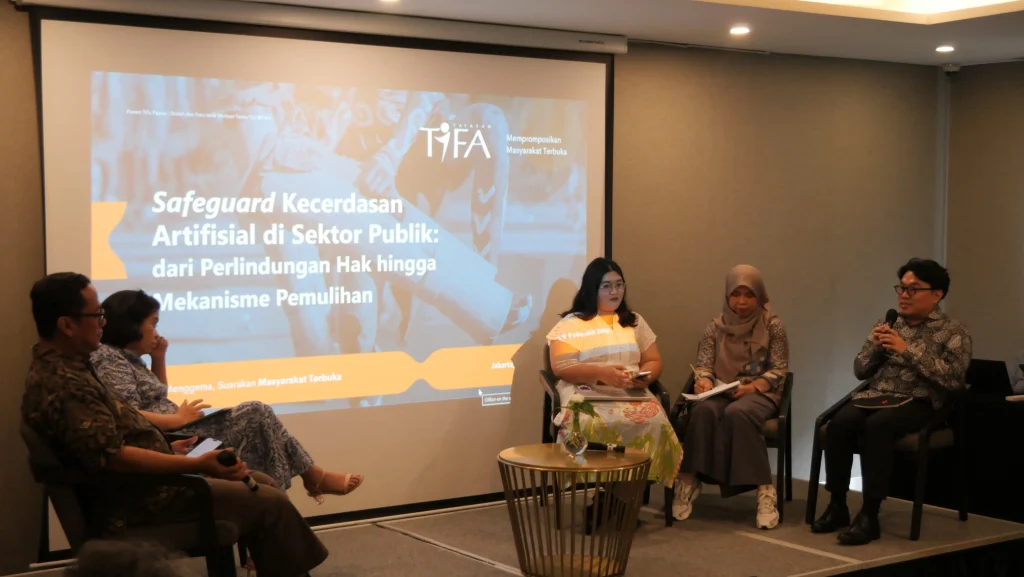
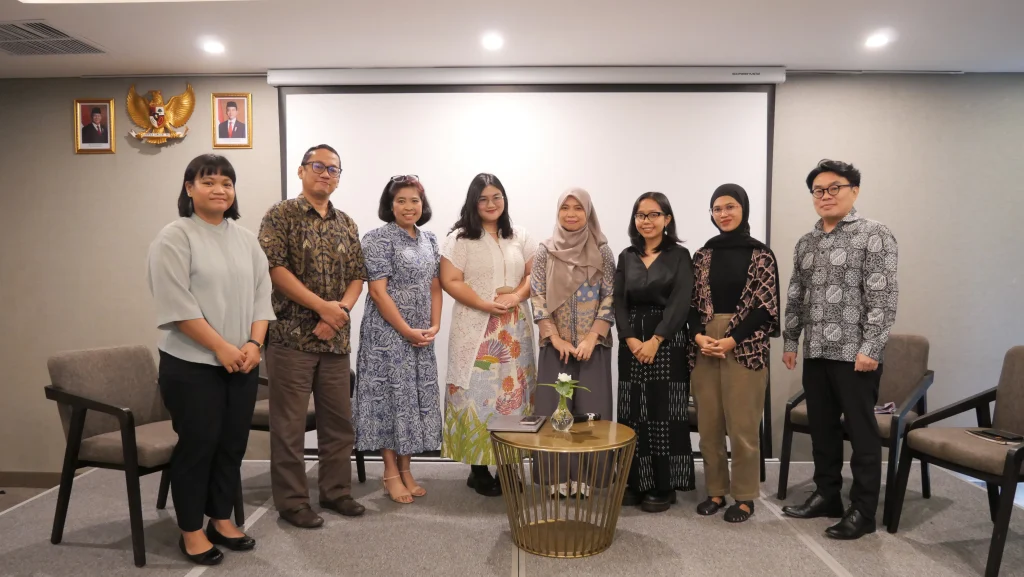
Jakarta, February 27, 2026 — The Tifa Foundation hosted a multi-stakeholder discussion titled “AI Governance and Oversight in the Public Sector: Regulation, Risks, and Mitigation” in Jakarta (February 19). This closed-door discussion invited representatives from the Ministry of Communication and Digital Affairs (Komdigi), the AI Ethics Working Group, legal scholars, and civil society organizations to dissect the recommendations forsafeguards presented by the Tifa Foundation. The trend of AI implementation in the public sector has the potential to pose significant risks to the fulfillment of fundamental public interests and services. These risks are primarily faced by vulnerable groups who still struggle to access and utilize digital technology, as well as those who are not proportionally represented in the datasets used as the basis for policy-making.
“To mitigate these risks, the Tifa Foundation recommends protective measures focused on three key areas: First, strengthening the accountability of the government, which plays a central role in the use of AI in public services. Second, the use of human rights-based impact and risk assessment mechanisms. Third, the provision of accessible and responsive complaint channels and redress procedures for affected citizens,” said Debora I.C., Project Manager for Data Policy and Governance at the Tifa Foundation (Feb. 19).
In response, Irma Handayani, Chair of the Roadmap, Ethics, Governance, and Oversight of Artificial Intelligence Regulation Team at Komdigi, explained that detailed regulations regarding safeguard mechanisms for the use of AI in public services are left to the ministries and agencies. “Ministries and agencies need to follow up on the AI ethics guidelines, including regarding recovery mechanisms to minimize risks and monitor implementation,” said Irma.
Henke Yunkins, Chair of the AI Task Force’s Ethics Working Group, believes that even though safeguard mechanisms are left to ministries and agencies, there is still a need for a body that serves as a point of contact for complaints from members of the public affected by the use of AI in the public sector. This body must have the capability and capacity to develop complaint channels that are easily accessible and understandable, and integrated with swift investigative mechanisms and holistic remedial procedures.
The need for safeguard mechanisms has become urgent given the various incidents that have occurred. EngageMedia’s monitoring results indicate a surge in AI-related incidents. One notable incident involves ETLE fines issued against medical emergency services and the deactivation of BPJS PBI services, which are believed to have been carried out automatically and non-transparently with the aid of technology. As a result, access to healthcare services has been hindered. “In addition to this, there has been a surge of 88 AI incident cases since the issuance of the AI Ethics Circular in 2023,” said Siti R. Desyana, Digital Rights Project Coordinator for Indonesia at EngageMedia.
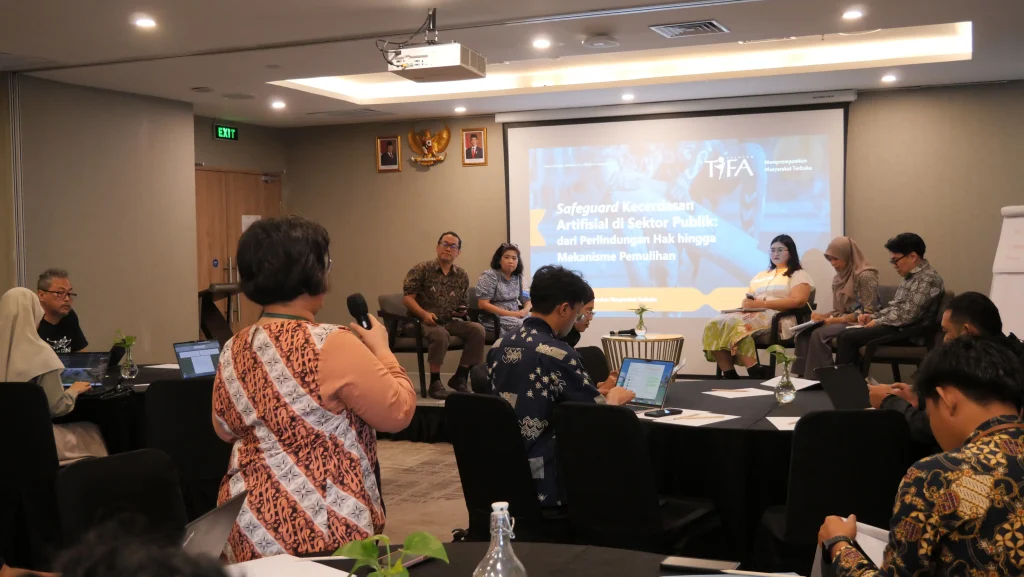
Meanwhile, Dr. jur. Sih Yuliana Wahyuningtyas from Unika Atma Jaya proposed several regulatory models, including risk- and loss-based approaches, the separation of general and sector-specific regulations, and an emphasis on humanitarian aspects and the penta-helix approach.
“In the monitoring and evaluation process, indicators such as performance, governance, operational and financial impact, and public trust are necessary,” added Yuliana.
The various inputs and feedback from the stakeholders invited to this multi-stakeholder discussion align with the recommendations proposed by the Tifa Foundation, namely that all forms of AI use in the public sector must be grounded in human rights. The Tifa Foundation believes that in the process of formulating regulations regarding AI, the public—especially those affected—has the right to actively participate. Thus, the use of AI is expected to be more transparent and accountable.
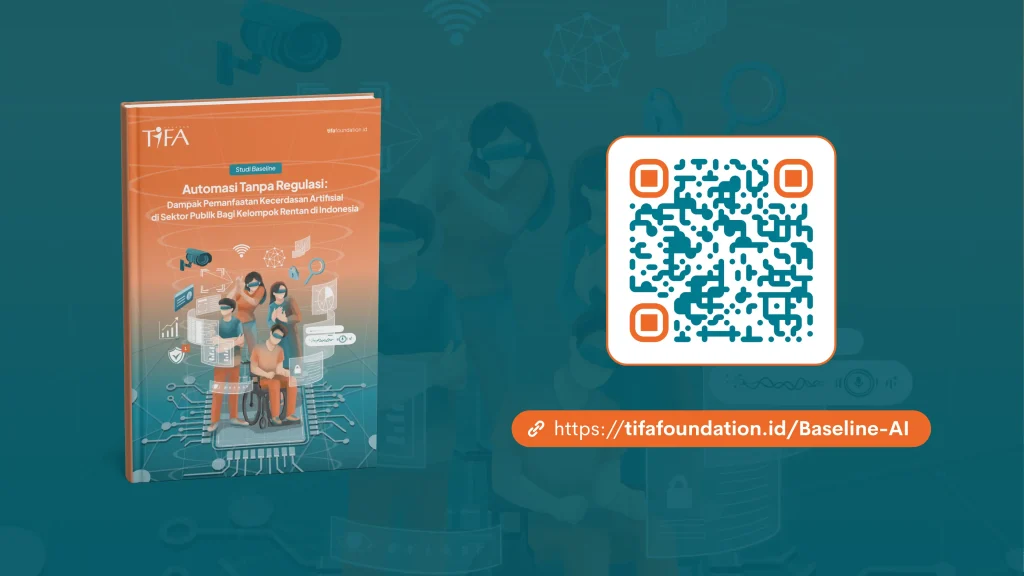
The policy paper containing proposals from the Tifa Foundation, titled“Safeguarding Artificial Intelligence in the Public Sector: From Rights Protection to Redress Mechanisms” can be accessed via the following link, and the results of the baseline study on the impact of AI in the public sector on vulnerable groups in Indonesia, titled “Automation Without Regulation: The Impact of Artificial Intelligence Use in the Public Sector on Vulnerable Groups in Indonesia,” can be accessed via the following link.