

Arie Mega
Project Research and Learning Specialist for the Digital Democracy Initiative at Tifa Foundation
From One Room to One Network: A Tech Collective Built in Response to Transnational Threats
On the final day of the training, just before everyone parted ways, the facilitator made a request that sounded simple but carried a great deal with it. Anyone holding photos taken with participants from the highest-risk contexts was asked to delete them before leaving the room. Not because documentation does not matter, but because for some people in that room, a single photo left in a phone gallery could mean a long line of questioning at a checkpoint on the way home.
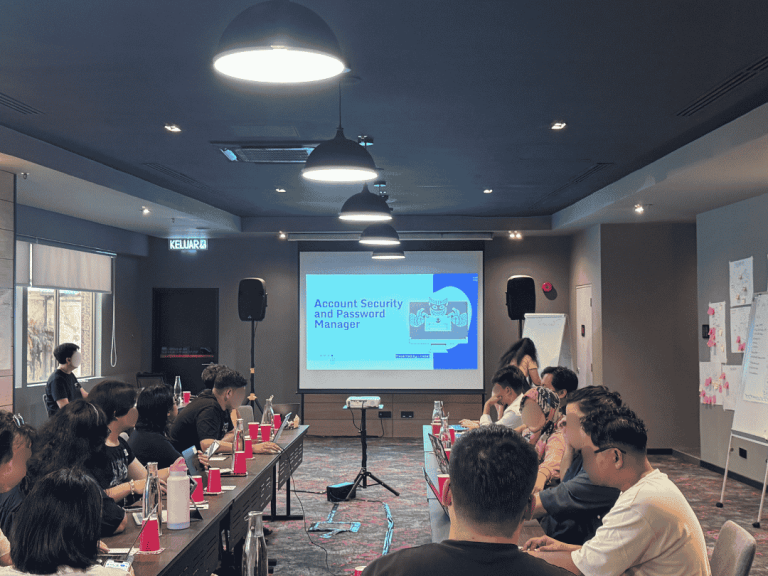
It was a fitting close to five days of the Young Tech Collective (YTC) onsite training in Kuala Lumpur in late May 2026. Twenty focal points from across Southeast Asia sat in the same room, yet each arrived carrying a very different map of threats.
“If they look and find a VPN application on your phone, you will be arrested.”
Different Threats, One Room
For one focal point from Myanmar, digital security began long before she arrived in Kuala Lumpur. She cleaned her devices, curated her social media so that it carried only neutral topics such as social entrepreneurship and career counselling, and deliberately left her organisation’s invitation letter behind. To the officers, she entered as an ordinary tourist.
“I never post anything related to non-profit work,” she said. In her country, phone inspections are routine, and the answer she must give has become a reflex. “We always answer, we have no money, so we can only use a keypad phone.”
Another participant from Myanmar, PH, faces the same problem in a different form. He now works across borders, and every time he has to return home, he goes through the same ritual. “I have to delete it. If I do not bring another device, I have to delete all the email. I have to delete Facebook as well,” he said. The reason is both simple and heavy: “If they look and find a VPN application on your phone, you will be arrested.”
On the other side of the room, LJ, a focal point from a labour and human rights institution in the Philippines, brought a story with a different texture again. Since the anti-terror law was passed, the organisation has repeatedly been linked to terrorist groups, a practice known there as red-tagging. Its social media accounts are flooded with comments and messages from anonymous accounts, complete with AI-generated images. In 2024, the threat moved into physical space. “My phone was telling me that an air tag was being tracked. So they can see where I am going. Like the full map,” he recalled.
The Same Pattern After All
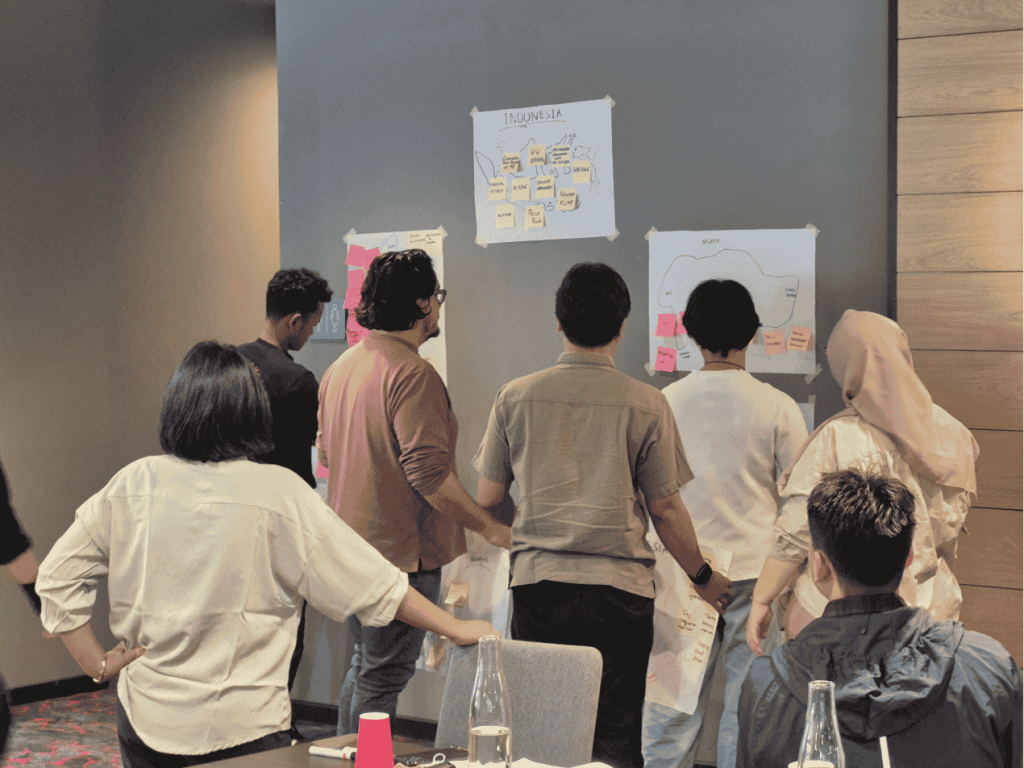
Over five days, those stories met one another, and that is where something shifted. Participants from the countries that had felt their situation was the heaviest found that they were not alone, while those from contexts that felt relatively safe realised the distance was not as wide as they had assumed.
LJ admitted it was the first time he had heard that using a VPN or certain messaging apps could lead to arrest. Yet he immediately connected it to news at home, where proposals to block several messaging applications had surfaced earlier this year. Participants from Indonesia recognised the same pattern in the daily obligation to surrender identity data for official documents, against a backdrop of repeated data breaches.
The conclusion that emerged was not that every context is identical, but that the pressure works in similar ways and travels from one country to the next. “We must learn from other countries, the best practices of other countries in terms of securing themselves,” LJ said. “If one human rights defender is affected by risk or threats, it is also a threat for other human rights defenders. So as Asian countries, we need collective care and collective digital security.”
From a Room to a Network
This is why a community of practice is one of YTC’s objectives rather than a pleasant side effect of a training. After those five days, the focal points remain connected through an encrypted cross-country messaging group, a shared repository for materials and working documents, and regular check-ins with the accompaniment team throughout the four months of mentoring. Some connections bore fruit immediately, such as a focal point from Yogyakarta who was linked to a community technology organisation in his own city, something he had not known existed so close by.
For DF, a focal point from a regional youth network organisation, what stayed with her most was how the room itself felt. “Everyone here was mindful and open-minded, which made the safe space genuinely tangible,” she said. “It feels like these friendships can continue, not just at this event.”
Her hopes are concrete. “I want this friendship, this network, to keep going, so that we can support each other,” DF said. “Whether that is mental support, or as we discussed, international support, movements and campaigns that back each other up.”
“Even when the topic is security policy, the essence is still collective work,”
What Keeps a Network Alive
Infrastructure alone is never enough. A messaging group and a shared drive will remain quiet rooms if there is no strong reason for people to stay engaged. According to RS, one of the facilitators from the Digital Defenders Partnership (DDP), what keeps a community alive is when security is understood as shared work rather than the duty of the one person who knows technology best. “Even when the topic is security policy, the essence is still collective work,” he said, “how they make this organisation safer together.”
That collective work does not always take the form of a policy or a protocol. Sometimes it is as simple as that request on the final day, when twenty people from different countries opened their phone galleries at the same time and deleted photographs, for the safety of someone they had met only five days earlier. That is where a network truly begins.
About the Young Tech Collective (YTC)
As DDI’s non-financial support mechanism, Tifa implements YTC together with DDP to address the pressing needs of civil society organisations (CSOs), which often face limited resources and technical capacity in digital protection. Field experience shows that one-off training is frequently not enough: knowledge gained in the classroom rarely survives the return to daily work routines, and the security practices introduced are easily abandoned when no further accompaniment follows. Adopting a holistic, community-based and intersectional approach, YTC therefore provides four months of accompaniment designed around each partner organisation’s contextual risk profile, facilitating them to strengthen their holistic security capacity through a series of trainings, the strengthening of technological infrastructure and internal policy, and mentoring. The programme currently works with 13 organisation CSOs across Southeast Asia. Through this process, focal points connect with a network of young tech activists in the region and become part of the digital protection infrastructure for civil society.
Written as part of the learning documentation for the Young Tech Collective (YTC), a non-financial support mechanism under the framework of the Tifa Foundation’s Digital Democracy Initiative (DDI).